
In today’s fast-changing business environment, companies are constantly looking for flexible and cost-effective hiring solutions. This is where Contract Hiring has emerged as a powerful strategy. Instead of committing to long-term employment, organisations can hire skilled professionals for a specific period or project. This approach allows businesses to stay agile, meet urgent demands, and access specialised talent without long-term obligations.
Understanding what contract hiring is, is essential for companies aiming to scale quickly or manage workload fluctuations. From startups to large enterprises, many organisations are leveraging this model to improve efficiency and reduce hiring risks. The Benefits of Contract Hiring go beyond cost savings – they also include faster hiring, flexibility, and access to niche skills. With the right approach, businesses can unlock the Advantages of Contract Hiring and build a workforce that adapts to evolving market needs.
What is Contract Hiring?
Contract Hiring is a recruitment model where companies hire employees for a fixed duration or specific project instead of offering permanent roles. These professionals work under a contract that clearly defines the job role, duration, payment terms, and responsibilities.
This type of hiring is commonly used for short-term projects, seasonal work, or when companies need specialised expertise. Unlike permanent employees, contract workers are not always part of long-term organisational structures, which gives companies more flexibility in workforce management. Understanding what contract hiring is helps businesses decide when and how to use this model effectively.
Benefits of Contract Hiring
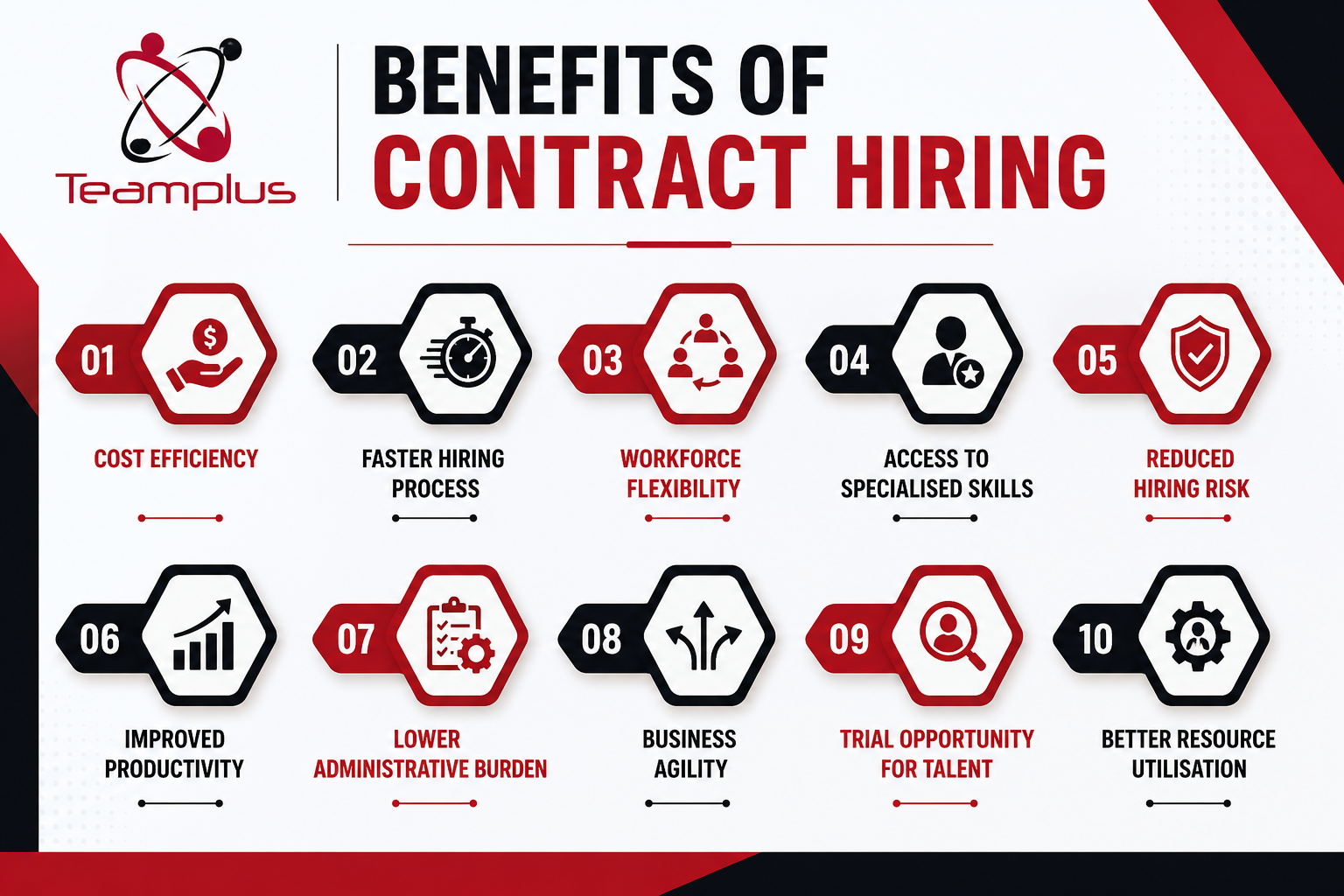
The Advantages of Contract Hiring go beyond operational efficiency. It also helps organisations improve overall business performance. Here are the benefits of contract hiring:
Cost Efficiency
One of the most important Benefits of Contract Hiring is cost savings. Companies do not have to bear long-term expenses such as employee benefits, bonuses, training costs, or retirement plans. Since contract employees are hired for a specific duration, businesses only pay for the work required. This makes it a budget-friendly option, especially for startups and growing companies.
Faster Hiring Process
Contract Hiring significantly reduces the time required to fill positions. Unlike traditional hiring, which can take weeks or months, contract roles can be filled quickly through staffing partners or existing talent pools. This speed is crucial when companies need immediate support for projects or sudden workload increases.
Workforce Flexibility
The Advantages of Contract Hiring include the ability to scale teams as per business needs. Companies can easily increase or decrease their workforce depending on project demands, seasonal work, or market conditions. This flexibility helps organisations stay agile and avoid overstaffing.
Access to Specialised Skills
Another key benefit is access to highly skilled professionals with niche expertise. Contract workers often bring industry-specific knowledge and experience, making them ideal for specialised tasks or technical projects. This allows businesses to maintain high-quality output without long-term commitments.
Reduced Hiring Risk
Understanding what contract hiring is also highlights its lower risk factor. If a project ends or a role is no longer required, companies can conclude the contract without complications. This reduces the risk associated with permanent hiring and helps manage workforce changes more efficiently.
Improved Productivity
Contract employees are usually focused on specific goals and timelines. Since their roles are project-based, they tend to deliver results quickly and efficiently. This leads to improved productivity and faster project completion, which is a major advantage for businesses.
Lower Administrative Burden
The Benefits of Contract Hiring also include reduced administrative responsibilities. Many contract workers are managed through third-party agencies, which handle payroll, compliance, and documentation. This allows internal HR teams to focus on strategic tasks rather than routine processes.
Business Agility
In a rapidly changing market, businesses need to adapt quickly. Contract Hiring allows companies to respond to new opportunities, market demands, or unexpected challenges without long-term commitments. This agility is essential for staying competitive.
Trial Opportunity for Talent
One of the practical Advantages of Contract Hiring is the ability to evaluate candidates before offering permanent roles. Companies can assess a worker’s performance, skills, and cultural fit during the contract period, reducing the chances of a wrong hire.
Better Resource Utilisation
With Contract Hiring, companies can allocate resources more effectively. Instead of maintaining a large permanent workforce, businesses can hire talent only when needed. This ensures optimal use of time, money, and manpower while maintaining operational efficiency.
Contract Hiring vs Permanent Hiring
To better understand what contract hiring is, it is important to compare it with permanent hiring.
Permanent hiring focuses on long-term employment, employee development, and organisational growth. It is suitable for core roles that require stability and continuity.
On the other hand, contract hiring is more flexible and project-based. It is ideal for temporary needs and specialised tasks. While permanent employees contribute to long-term goals, contract workers help achieve short-term objectives efficiently.
Both models have their place, and many companies use a mix of both to create a balanced workforce. Click to learn about contract hiring vs permanent hiring.
Why Businesses Prefer Contract Hiring
Modern businesses operate in a dynamic environment where requirements can change quickly. Hiring permanent employees for every need is not always practical. Contract Hiring provides a solution by allowing companies to bring in talent only when required.
For example, during product launches, IT upgrades, or peak business seasons, companies often need additional support. Instead of going through lengthy hiring processes, they can quickly onboard contract professionals. This flexibility is one of the key Advantages of Contract Hiring, helping organisations stay competitive and responsive.
Final Words
Contract Hiring is no longer just an alternative hiring method – it has become a strategic approach for modern businesses. By understanding the Benefits of Contract Hiring and implementing it effectively, companies can improve flexibility, reduce costs, and access top talent with ease.
The Advantages of Contract Hiring make it an ideal choice for organisations looking to adapt to changing market demands. With the right strategy and execution, businesses can build a dynamic workforce that supports both short-term goals and long-term success.