
Hiring employees in the UAE is not just about finding the right candidate; it also involves following a structured legal process. Employers must comply with labour laws, visa requirements, and government regulations to avoid penalties and ensure smooth hiring. In 2026, with increasing competition and stricter compliance rules, understanding the hiring process in the UAE has become more important than ever.
In this blog, we will provide a complete guide on the hiring process in the UAE for Employers in a simple and easy way.
Understanding UAE Labour Law
The hiring process in UAE is governed by the UAE Labour Law (Federal Decree-Law No. 33 of 2021), which applies to all private sector employees. It is regulated by the Ministry of Human Resources and Emiratisation (MOHRE), which ensures fair employment practices.
Under this law, employment contracts are mandatory, equal treatment of employees is required, and employers must follow wage and visa regulations. If a company does not follow these rules, it can face fines or legal problems.
Types of Employment in the UAE
Before hiring, employers need to choose the type of job they are offering. This helps in setting clear expectations for both the company and the employee. It is very important to clearly mention the type of employment in the contract. This helps avoid confusion or problems later. Common types of employment in the UAE include:
- Full-time jobs – Employees work regular hours for one company
- Part-time jobs – Employees work fewer hours than in full-time roles
- Temporary jobs – Short-term roles for specific projects or time periods
- Freelance or contract work – Independent workers hired for specific tasks
Step-by-Step Hiring Process in UAE for Employers
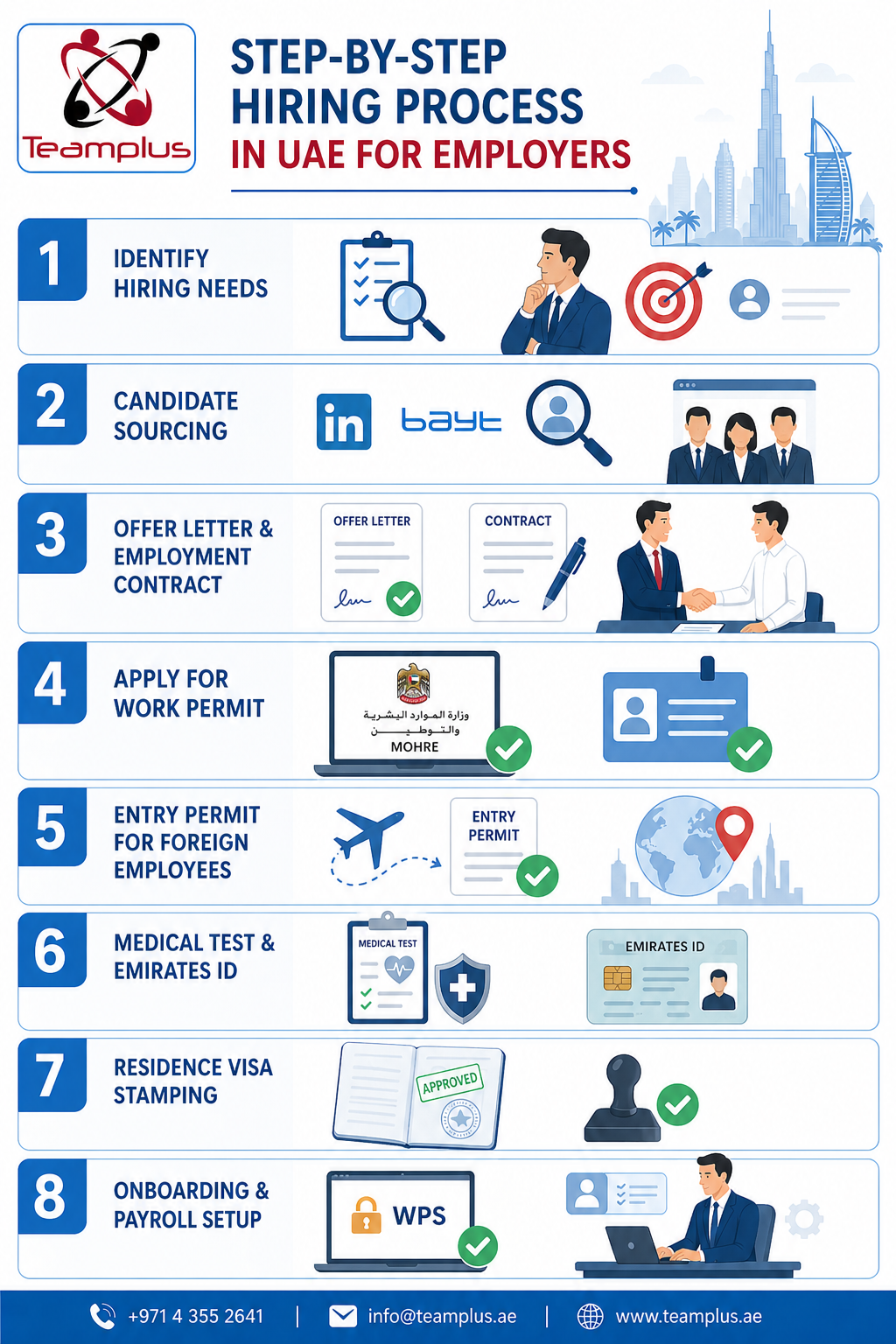
Here is the complete hiring process every employer should follow:
Step 1: Identify Hiring Needs
Start by clearly defining the job role along with its key responsibilities, the skills and experience required, and the salary and benefits you plan to offer. Having clarity at this stage helps attract the right candidates, speeds up the hiring process, and ultimately saves time by ensuring you focus only on suitable applicants.
Step 2: Candidate Sourcing
In this step, employers focus on sourcing candidates through various channels such as job portals like LinkedIn and Bayt, recruitment agencies, and employee referrals. Using the right sourcing method helps you reach qualified candidates faster, improves hiring quality, and reduces the overall time required to fill a position.
Step 3: Offer Letter & Employment Contract
In this step, once you have selected the right candidate, you move forward by sending a formal job offer letter and preparing the employment contract. The contract should clearly outline important details such as salary, job role, working hours, and the probation period to avoid any confusion later.
In the UAE, most employment contracts are fixed-term (typically up to 3 years) and must be officially registered with the Ministry of Human Resources and Emiratisation, ensuring compliance with local labour laws and protecting both employer and employee rights.
Step 4: Apply for a Work Permit
Employers must apply for a work permit through the Ministry of Human Resources and Emiratisation (MOHRE) before the employee starts working. Hiring someone without a valid work permit is illegal in the UAE.
Step 5: Entry Permit for Foreign Employees
If you are hiring an employee from outside the UAE, you need to apply for an entry permit through the Ministry of Human Resources and Emiratisation. This permit allows the employee to legally enter the UAE and proceed with the remaining employment and visa formalities.
Step 6: Medical Test & Emirates ID
After the employee arrives in the UAE, they are required to complete a medical fitness test and apply for an Emirates ID. These steps are mandatory for obtaining residency approval and are carried out under the supervision of authorities like the Ministry of Human Resources and Emiratisation. Completing these formalities ensures the employee can legally live and work in the country.
Step 7: Residence Visa Stamping
In this step, the employee’s residence visa is stamped in their passport. This confirms that they are legally allowed to live and work in the UAE, completing the main legal process for employment.
Step 8: Onboarding & Payroll Setup
In the final step, employers complete the onboarding process by registering the employee in the Wage Protection System (WPS) and providing proper training. This ensures timely and compliant salary payments while helping the employee understand their role and adjust smoothly to the company.
Documents Required for Hiring in UAE
Without proper documents, the application can be delayed or even rejected. These documents are very important for processing the work permit and visa. Employers need to collect the following documents:
- Passport copy
- Passport-size photographs
- Educational certificates
- Signed employment contract
Hiring Costs in the UAE
Hiring an employee in the UAE includes different types of costs, such as work permit fees, visa processing costs, medical tests, Emirates ID, insurance, and recruitment expenses. On average, the total hiring cost is about 1.25x to 1.4x of the employee’s yearly salary.
This means hiring can be expensive, so employers should plan their budget properly before starting the hiring process.
Common Hiring Challenges in UAE
Understanding these challenges helps businesses plan better and avoid delays or problems while hiring. Employers in the UAE often face these challenges:
- Complex visa process: The paperwork and approvals can take time and require accuracy
- High hiring costs: Expenses like visa, insurance, and recruitment can be expensive
- Strict legal rules: Companies must follow all labour laws and government regulations carefully
- Talent shortage in some fields: Finding skilled workers in certain industries can be difficult
Best Practices for Hiring in UAE
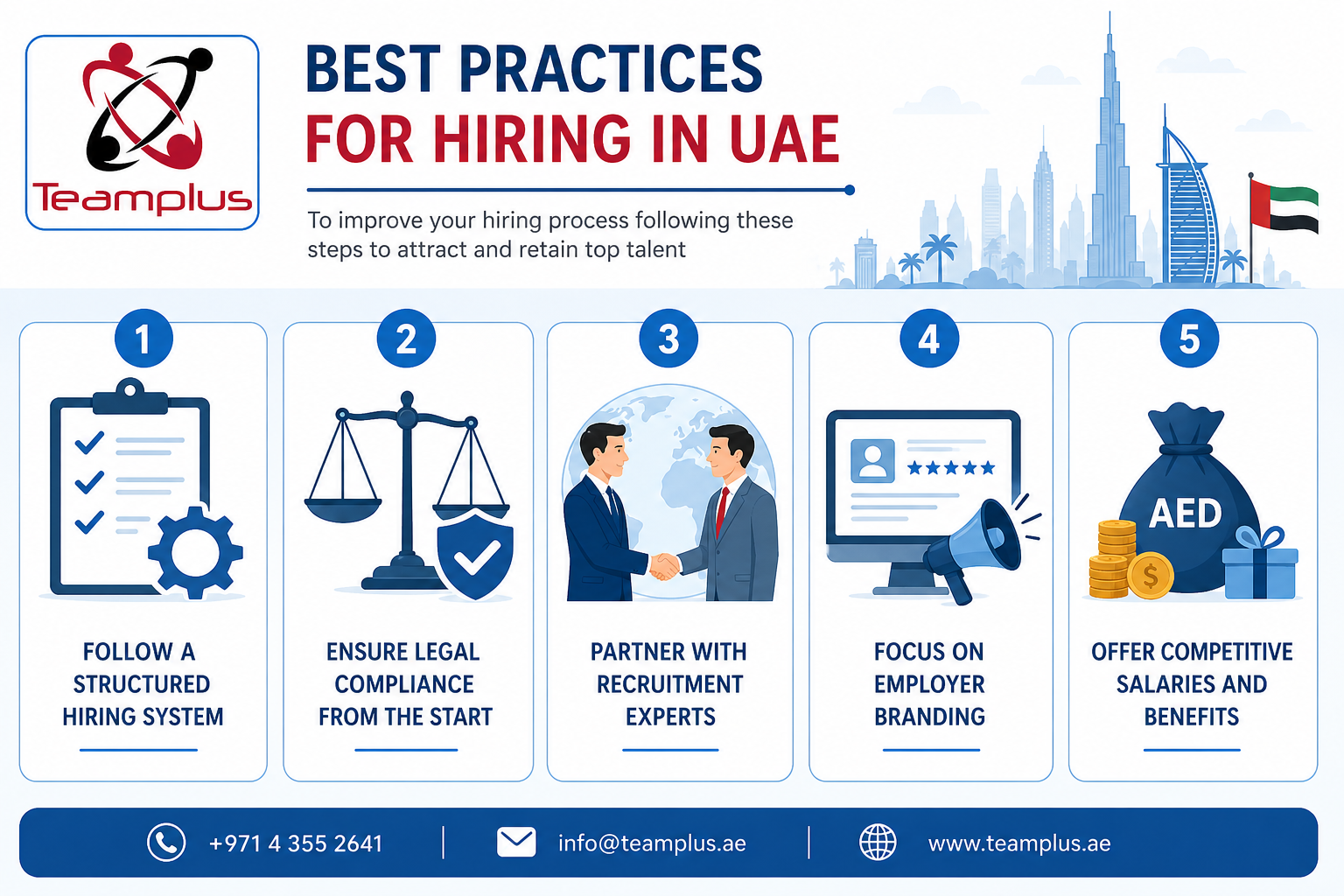
To improve your hiring process following these steps to attract and retain top talent:
- Follow a structured hiring system
- Ensure legal compliance from the start
- Partner with recruitment experts
- Focus on employer branding
- Offer competitive salaries and benefits
Conclusion
The hiring process in UAE for employers is structured, legal-driven, and highly regulated. From defining job roles to obtaining work permits and visas, every step must be followed carefully.
By understanding UAE labour laws and adopting best hiring practices, employers can build a strong, compliant, and future-ready workforce.